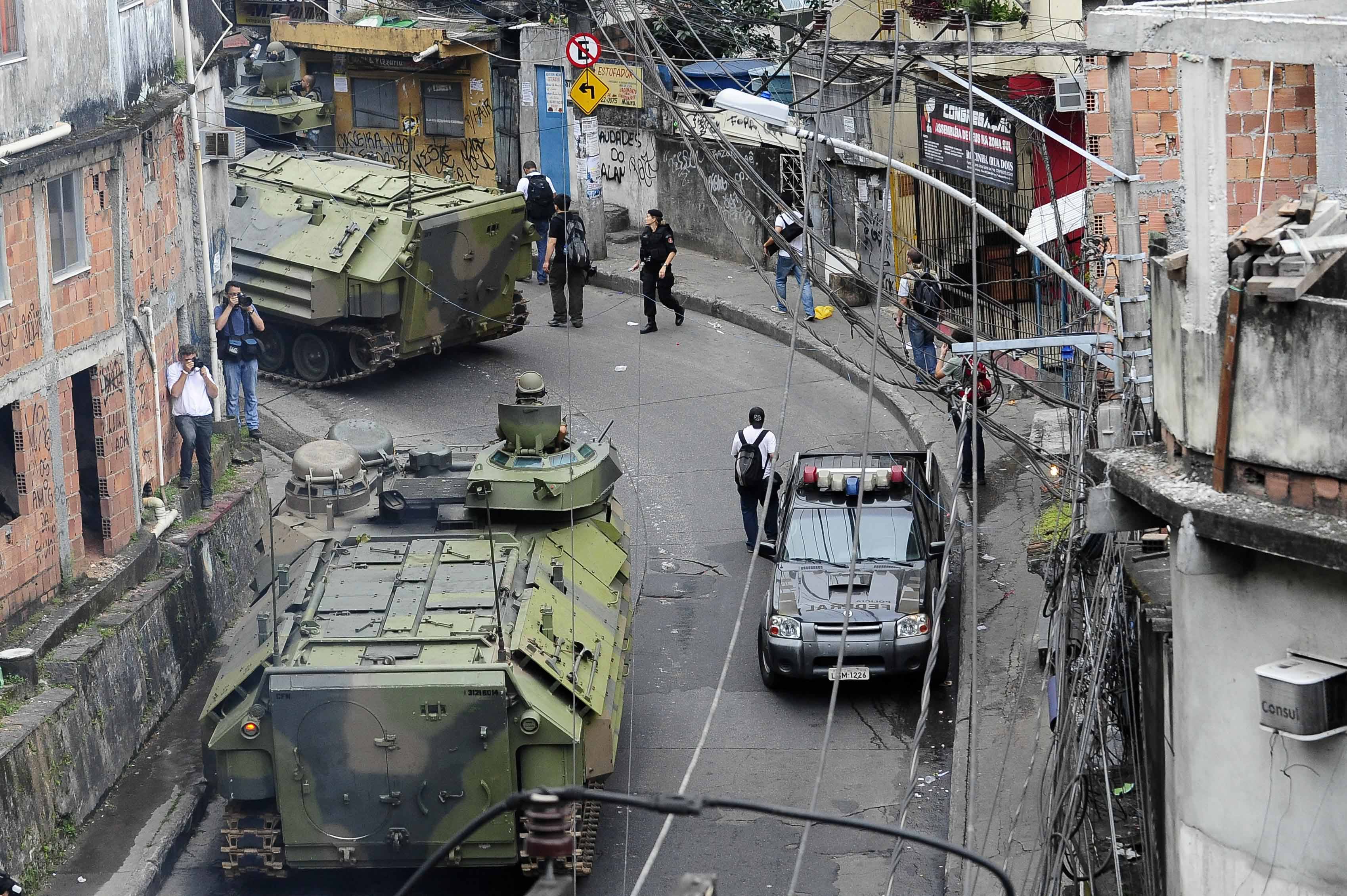
Problems in pacifying Rio de Janeiro slums
 By | Associated Press – 16 hrs ago
RELATED CONTENT
- In this photo taken April 11, 2012, …
- In this photo taken April 11, 2012, …


RIO DE JANEIRO (AP) — Jose Martins de Oliveira has lived with plenty of weapons and violence during his 45 years in the sprawling hillside shantytown of Rocinha. For most of that time, it was drug traffickers who controlled the giant slum with brutal force.
Now, it's the police he's worried about.
Since November, several police officers sent in to save the neighborhood have been accused of taking bribes. Another was murdered in a shootout. And just last week, three were charged with rape.
"With the police, we thought we'd have more tranquility," the 65-year-old Martins said. "We feel a little fooled. We were told we'd have peace."
Martins and other residents had high hopes when law enforcementarrived to seize control of the neighborhood in a much-hyped security program meant to prove that this Olympic city is capable of stemming endemic violence — among the promises made duringRio's candidacy to host the 2016 Games.
But the immense challenges the police have faced in pacifying the city's violent slums have raised questions about the state's ability to keep the peace as Rio prepares to take the world stage not just for the Olympics but the 2014 World Cup, which will host its headline events in Rio.
The head of state security nearly doubled the number of officers patrolling Rocinha from 350 to 643 in April to deal with the violence, which included execution-style killings. That heavy police presence has ironically become the most visible sign that the transition is not going smoothly.
Since the highly publicized slum "pacification" program began in late 2008, it became a centerpiece of Rio state's government. More than 21 permanent police units with nearly 4,000 officers have been created citywide, covering 89 shantytowns.
Jose Mariano Beltrame, the state's head of security and the program's architect, said in a press conference that it's helping "more than 1 million people sleep in peace." Another 19 units will be inaugurated across this city before Rio hosts the final World Cup match.
With Rocinha's takeover, the police closed its grip on areas key to ensuring the safety of the millions of visitors expected to flood into the city.
Police with rifles strapped to their chests patrol shantytowns along the road from the main international airport into town. They can also be seen in the slums surrounding Rio's iconic Maracana stadium, where the Olympic opening ceremony will be held, and posh southside Rio neighborhoods such as Ipanema and Copacabana. Nearly all the areas had been in the hands of drug lords, who ruled them as their private fiefdoms, violently dispensing justice and demanding loyalty from residents.
Rocinha's seizure was particularly dramatic, further raising expectations of a better life. The slum's leading drug lord, Antonio Bonfim Lopes, suffered a humiliating arrest days before the takeover, appearing on Brazilian television being pulled from the trunk of a car, after being caught trying to escape.
The takeover that followed was quick and peaceful. Not a single shot was fired, and in less than two hours, police had seized control of territory that had been under the domain of drug traffickers for decades. Rio's main newspaper trumpeted the news, announcing the next day in a giant, front-page headline: "Rocinha is ours."
Euphoria spread through the community in the days that followed, Martins said. Drug gangs had made attaining even basic services such as mail delivery and trash collection difficult, he said, so everyone sighed with relief when municipal workers scoured the slum, leaving Rocinha clean.
"We were so hopeful," Martins said. "Now it seems we've traded the guns of traffickers for the guns of police. These are official, so we can complain of abuses, and that's better. But in the end it's not guns that are going to make things better and convince the people who live here: It's services, things like running water, sewage, and shoring up unstable hillsides that can slip when it rains. And those aren't here."
Over the past few months, police have opened investigations into point-blank shootings linked to a fight over control of drug sales, especially since old gang bosses have been jailed. One of those killed was a former neighborhood association leader who was facing charges of laundering drug money.
At the same time, the old vices of Rio's police such as corruption and abuse have surfaced. Residents say they've been disgusted by reports of officers taking bribes from drug traffickers who want to keep doing business. This week, a resident charged three officers with rape; the men were arrested pending an investigation.
The state responded to the killings by throwing young officers still in training into the shantytown to bolster forces and help keep peace.
Beltrame said he would not waver in his campaign to make Rocinha and Rio safe, but reiterated his warning: Implementing the police pacification units will be a long and difficult process.
"In every area we go in we've had problems. In every single one," said Beltrame. "We cannot undo in months what the dictatorship of drug traffickers did to Rocinha and to other communities in this city over 40 years. There are phases to the installation of (the units), and we are in the beginning. But we will not back down."
Rio state police chief, Erir Ribeiro da Costa Filho, also asked for patience and promised that any officers found guilty of corruption or crimes against the population would be punished.
"Any officers caught in an infraction can and will be excluded from our organization," he said. "They will be investigated."
Rocinha is not the only community in which the program ran into trouble. In September, an anonymous tipster notified pacification unit chiefs that some of the officers patrolling the bohemian Santa Teresa neighborhood were taking monthly payments from drug dealers in exchange for their lenience. Three officers were caught carrying $6,900; the case escalated, and the police unit's leader had to be removed only six months after the unit's inauguration.
In the Alemao slum complex, tensions have heightened between residents and occupying police and army troops. Those who live there have complained about rough searches and abuses by law enforcement, while army troops supporting police suffered 89 attacks by residents in February, including one with sticks and stones during a goodwill visit by British Prince Harry.
Even residents who welcome the police program chafe against the myriad rules and strict control that officers enforce.
"When they (law enforcement) came in, they called an assembly, but it was only to tell us how things were going to be," said Roberto, a Rocinha resident who didn't want to give his last name for fear he'd be singled out for his criticism.
"I don't want to live anywhere else; this is where my life is," he said. "But I want a community with a voice. I know we can't determine the course of police work, but as citizens, we should be able to speak about what kind of community we want to have."
In spite of the problems, the citywide program has been successful if judged by its official aims: to break territorial control by armed groups in specific communities, and to reduce violence, said Ignacio Cano, a researcher with Rio's state university.
But the real question is not whether the city will be safe enough for the World Cup and Olympics, but whether the program can provide long-term security, he said.
Hundreds of communities are still ruled by drug-dealing criminals or militias composed in part of corrupt police, dwarfing the 21 pacification units up and running so far. And there simply aren't enough police officers to extend the reach of the state into every shantytown, Cano said.
"The local impact seems to be positive, but it is limited," he said. "The (pacification units) have been created in areas of the south zone, touristic areas, middle- to high-income areas, areas connected to the World Cup and Olympic games. It doesn't go to the most violent areas, the west of the town, the north of the town and the suburbs."